


Sitting as a Judge of the High Court in Bristol, HHJ Matthews handed down judgment on 7 November 2025 in the matter of EJW Builders Limited v Marshall & Otrs [2025] EWHC 2898 (Ch). Following the dismissal of the claim by the claimants (a construction company and its director) after a 2 day trial (see [2025] EWHC 2765 (Ch)), HHJ Matthews made a “pro bono costs order” in favour of the Access to Justice Foundation (AJF), solicitors and counsel for the Defendants having acted pro bono.
The judgment contains some timely and realist observations about the relevance of the principles set out in Truscott v Truscott [1998] 1 WLR 132, CA (also known as Wraith v Sheffield Forgemasters Ltd) in respect of the reasonableness of instructing “non-local” solicitors. HHJ Matthews observed as follows:
Assuming that it were right in the present case to ask whether the defendants acted reasonably, it does not follow that the factors identified by Kennedy LJ in Truscott would necessarily be the same today. The legal services market itself has changed enormously, over the last three decades, since Truscott was decided. There is much more choice of provider than there was then, and much more choice of funding agreement, including conditional fees, ATE insurance, and commercial litigation funding. Advanced technology is also eroding both distance and sense of place. Many firms have multiple offices in different parts of the country, including one in London, as well as large provincial centres. Some fee-earners work in more than one office. Specialisation is ubiquitous. A nimble-footed, highly specialist niche London firm, for example, may charge a higher hourly rate than a high-street provincial firm, but may do the same job more efficiently and quickly, so eroding the latter’s headline cost advantage. What it is reasonable for a paying litigant to do today in seeking legal services may therefore not be the same as at the time of Truscott. It all depends.
In awarding the same amount as he would have awarded had the Defendants been paying their legal representatives rather than receiving free legal advice and representation, HHJ Matthews had regard to the dual legislative purpose of s194 Legal Services Act 2007, citing Snowden LJ’s judgment in Manolete Partners plc v White (No 2) [2025] 1 WLR 1094, CA:
The introduction of section 194 was designed to put the parties on a more equal litigation footing by exposing the privately funded party to a similar risk of adverse costs. In addition, the identification of a charity as the beneficiary of an order under section 194 and the designation of the AJF makes clear the intent that orders under the section should provide a source of funding to support organisations involved in the provision of free legal help to a wider cross-section of the public who might be in need.
The costs order against the Claimants of £117,000 is notable for being the fifth largest pro bono costs order ever obtained.
Litigants might be emboldened by the comments of HHJ Matthews in instructing solicitors and counsel with case-appropriate specialism and experience, even if they happen to work in London. That HHJ Matthews ordered the same amount in respect of pro bono costs as he would have had the Defendants been footing their own costs will be welcome to the AJF and to those litigants the charity seeks to support who cannot afford professional specialist representation.
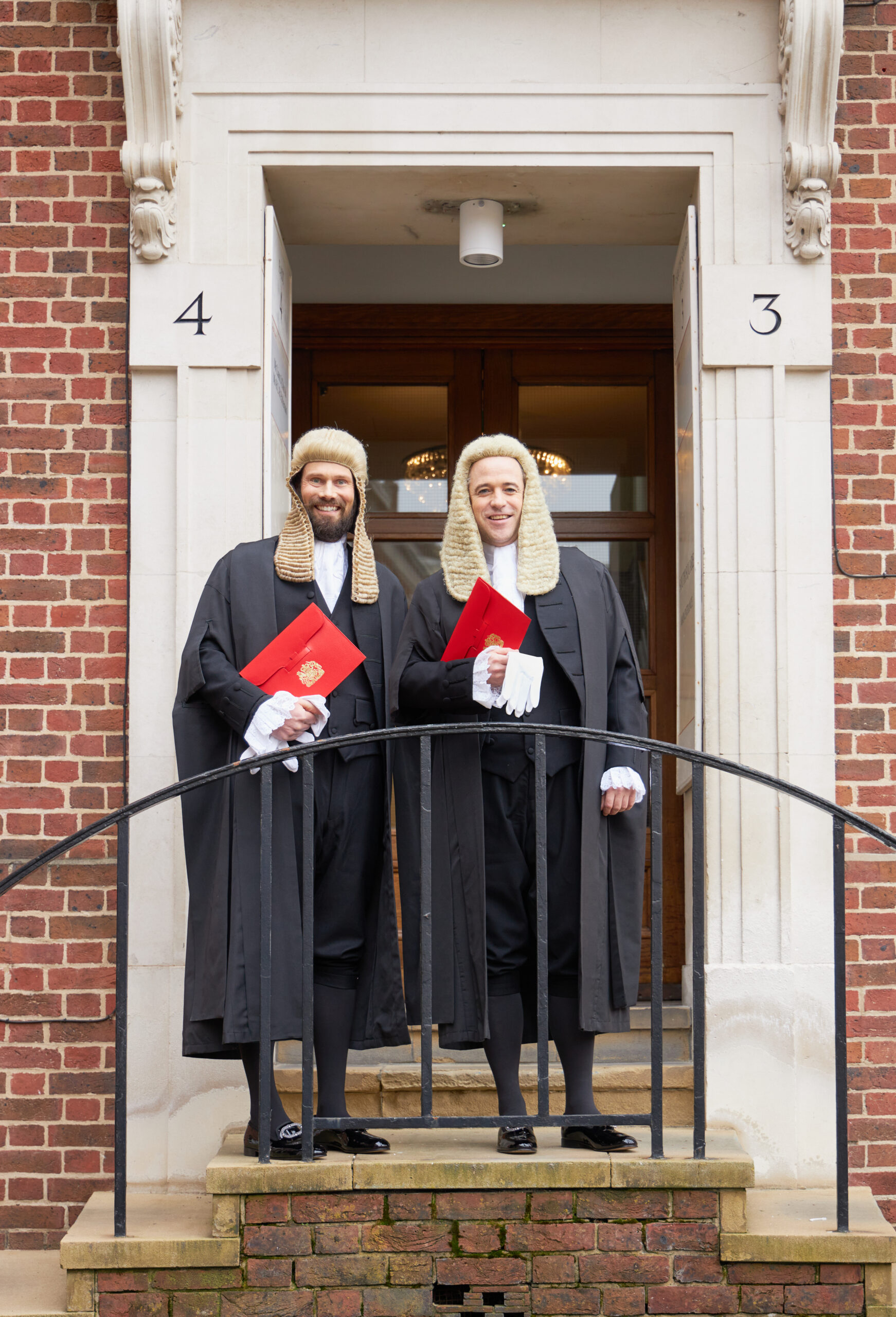
Rory Brown of South Square (instructed by Morgan Lewis & Bockius UK LLP) represented the Defendants.
![Judgment Hand Down: Re Equity for Growth (Securities) Limited [2026] EWHC 696 (Ch)](https://southsquare.com/wp-content/uploads/2025/06/alejandro-pohlenz-gYbOFTwcJx4-unsplash-scaled.jpg)
![NEW DECISION OF THE COURT OF APPEAL – Midland Premier Properties Ltd & Anor v Doal & Ors [2026]](https://southsquare.com/wp-content/uploads/2025/06/matthew-henry-VviFtDJakYk-unsplash-scaled-e1750083975207.jpg)
![New Judgment: CM Telecom (UK) Ltd v Buck [2026] EWHC 161 (Comm)](https://southsquare.com/wp-content/uploads/2025/06/tingey-injury-law-firm-DZpc4UY8ZtY-unsplash-scaled-e1750759105761.jpg)

![New Judgment: Re Eversholt Rail (365) Limited [2026] EWHC 101 (Ch)](https://southsquare.com/wp-content/uploads/2023/07/AdobeStock_334844505-scaled-e1691401199932.jpeg)